


It started as a joke on Discord
Every good side project starts with a bad idea said out loud. Mine started on a Discord call with a friend who was building an indie web game. We were helping each other turn his hobby into a real studio, and my accountant brain was useful for the business side. We both loved HBO's Silicon Valley, and one night the scrum scene came up, the one where Jared pitches a wall of sticky notes as the answer to everything.
I said, half laughing, "What if I actually built that scrum board?"
That joke became StarScrum, a scrum board app built around sticky notes.
The scene: Silicon Valley, Season 1, Episode 5
The scene comes from Season 1, Episode 5 of HBO's Silicon Valley. If you have not seen it, watch the scrum scene on YouTube before reading on. In it, Jared walks the team through a big board covered in colored sticky notes. The columns read Ice Box, Emergency, In Progress, Testing and Complete, and the rows split the product into pieces like Cloud, Ingestion Engine, Compression Engine and File Storage Services. It is a wall of sticky notes pitched as the answer to everything, and that picture stuck with me.
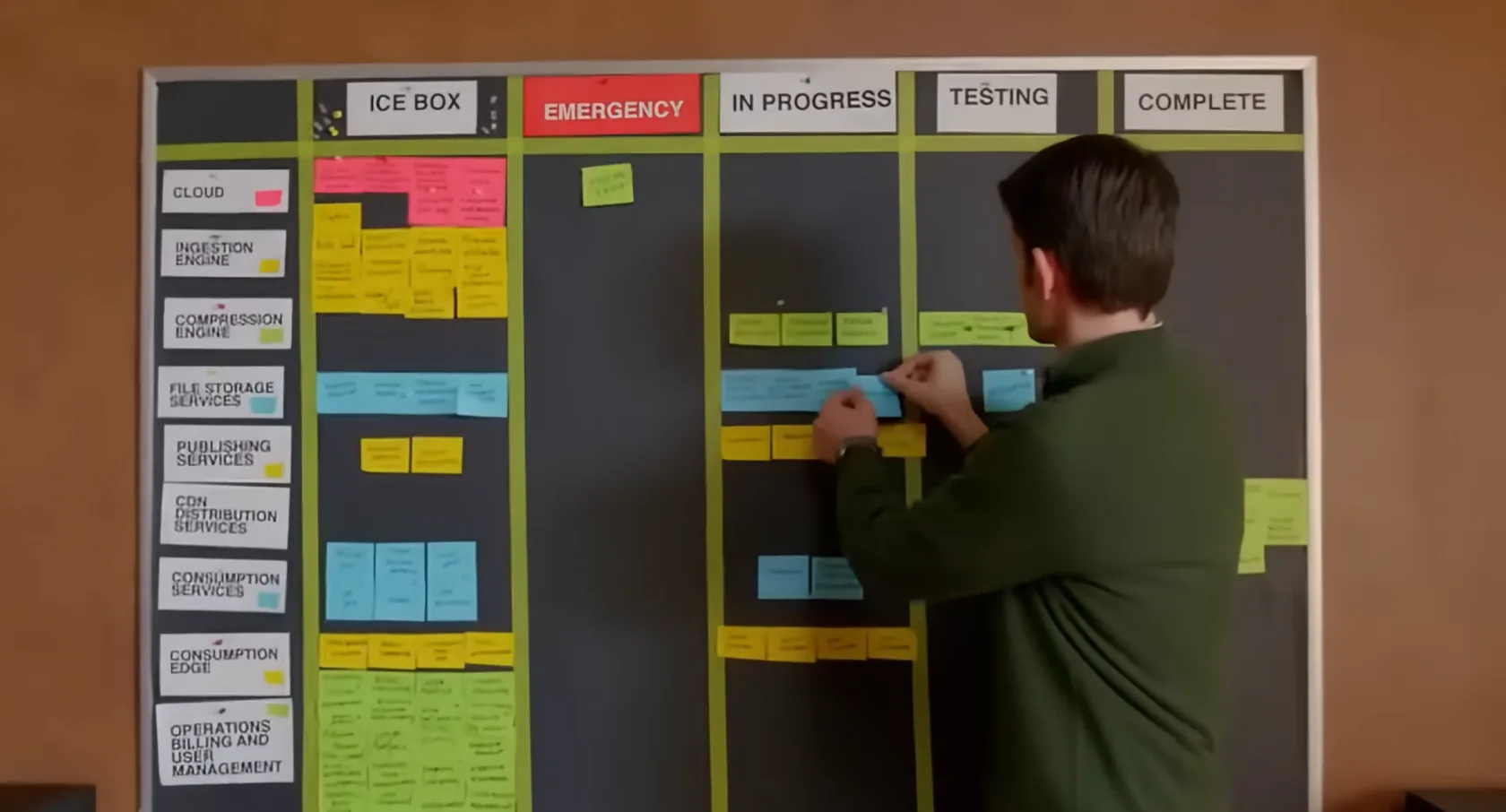
What always made me laugh about the scrum scene was the way Jared pitched it, the immediate doubt from the team, and then the rapid escalation of competition between Dinesh and Gilfoyle to complete the scrum stories.
It starts small. Jared adds three cards to the Ingestion Engine row and asks how long each one will take. Dinesh shrugs and guesses about four hours apiece. Gilfoyle cannot let that stand: "Each of those tasks would take me 3 max." From there it turns into a race to out-estimate and out-deliver each other.
That is the fun of a visible board. Every sticky in StarScrum can carry an estimate and a deadline, so your team can have the same argument over how long a card should really take.
From Pied Piper's wall to StarScrum's board
Jared's sticky-note scrum board was the direct inspiration for StarScrum's multi-column sticky layout. Work lives as colored stickies in columns, and you drag each one across as it moves from Backlog to In Progress to Completed.
If it worked for Pied Piper, it can work for anyone.
The first version was ugly, and it worked
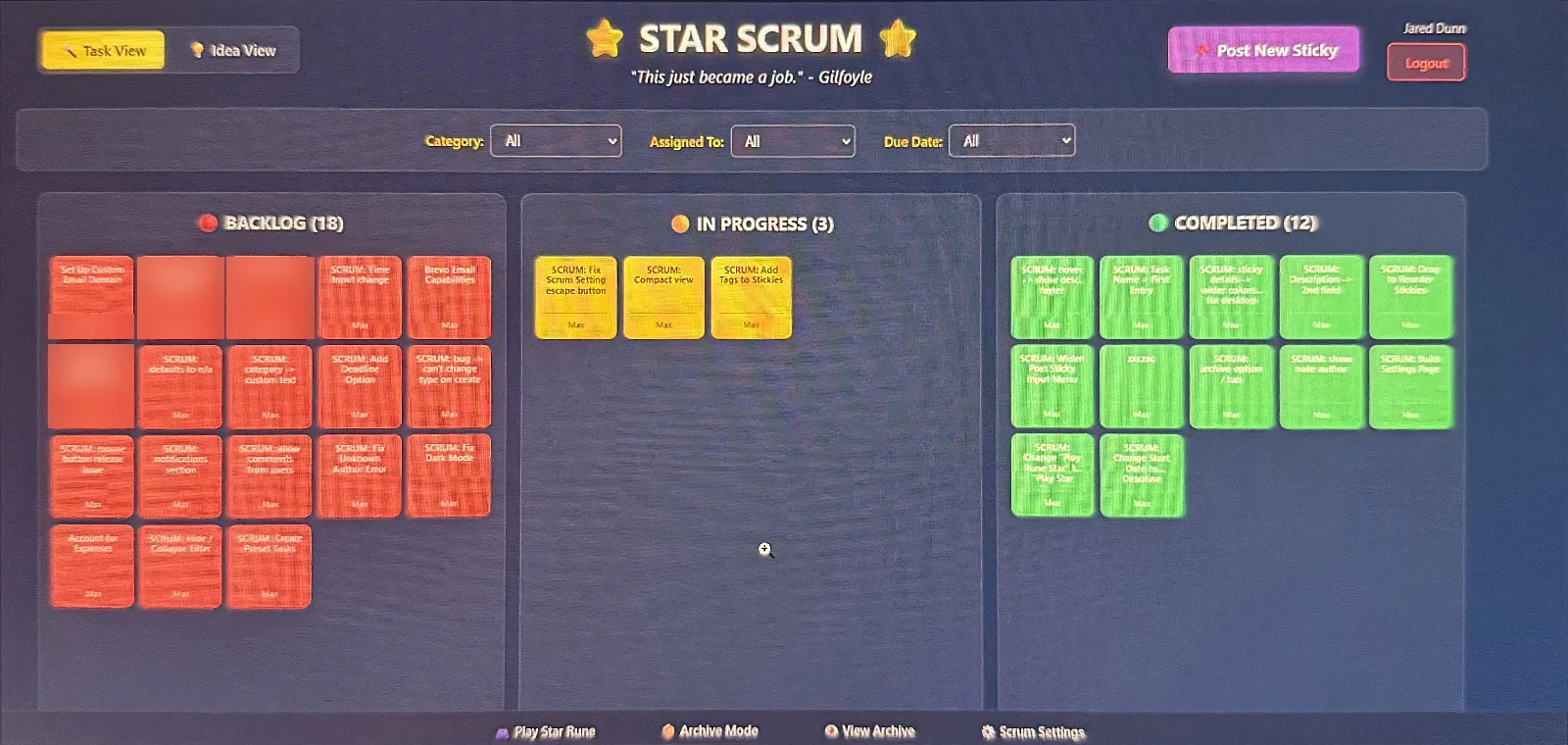
A few late nights later, the first StarScrum task board existed. It had three columns: Backlog, In Progress and Completed. You could post a sticky to the Backlog and drag it across. That was it. That very first throwaway version, from before the board in the photo below, had no login, no database and no settings.
Before
After
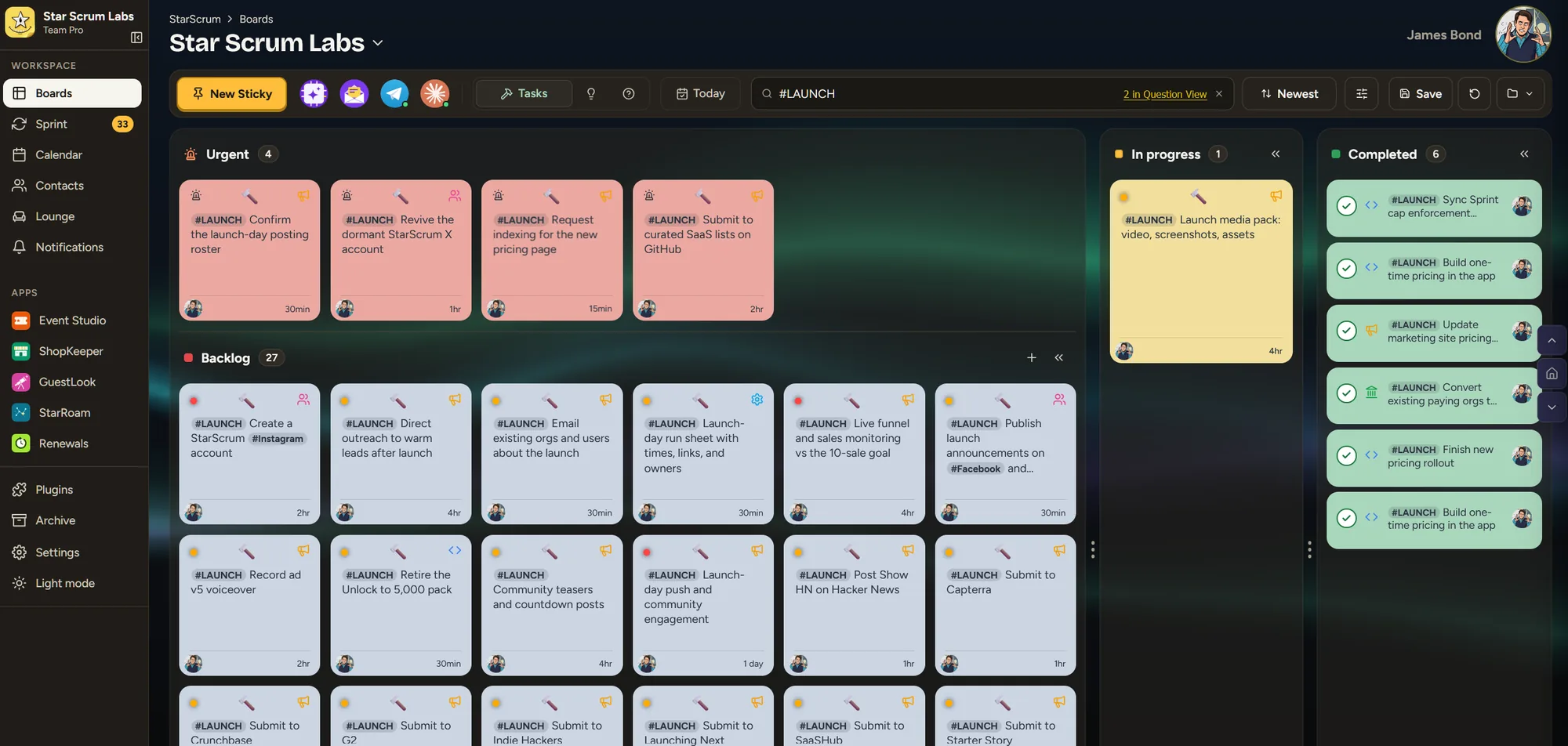
I thought it was genius anyway. A board you can see and touch beats a to-do list you forget about, and that idea has not changed.
Why sticky notes still beat a plain to-do list
A scrum board works because it makes work visible. A sticky has a clear owner, a clear status and a clear place to go next. When you move it, you feel progress. For solo founders and small teams, that small hit of momentum matters more than a long feature list.
That is the heart of StarScrum: tasks, ideas and questions live as stickies on one board that your team moves from backlog to done.
From a joke to a real workspace
The app kept growing because real work kept asking for more. Today StarScrum includes:
- Boards and sprints for planning and finishing work
- Calendar and contacts so deadlines and people sit next to the tasks
- Plugins such as Event Studio for running real events and ShopKeeper for selling products online
Two of those plugins now help a family business run events and sell online, which is the best proof I have that the idea works outside a demo.
What I learned building a scrum board app as a solo founder
- Start with the crude version. The first board had almost nothing, and that was enough to learn from.
- Keep it friendly. Project tools often feel like homework. A sticky-note board feels more like play, and people actually open it.
- Let real use set the roadmap. Events and online sales were not in the plan. A real shop needed them.
Try the board that started as a joke
If you want a simple, visual way to run projects, ideas and events in one place, you can start free at StarScrum. The free plan includes up to 3 users and 1 board, and no credit card is required.
Jared would approve.
